

![[]](http://au.thelab.care/cdn/shop/t/2/assets/search.webp?v=8072753122829130671777975882)
![[]](http://au.thelab.care/cdn/shop/t/2/assets/account.webp?v=114070388517372061431777975882)
![[]](http://au.thelab.care/cdn/shop/t/2/assets/cart.webp?v=51554646264971215851777975882)




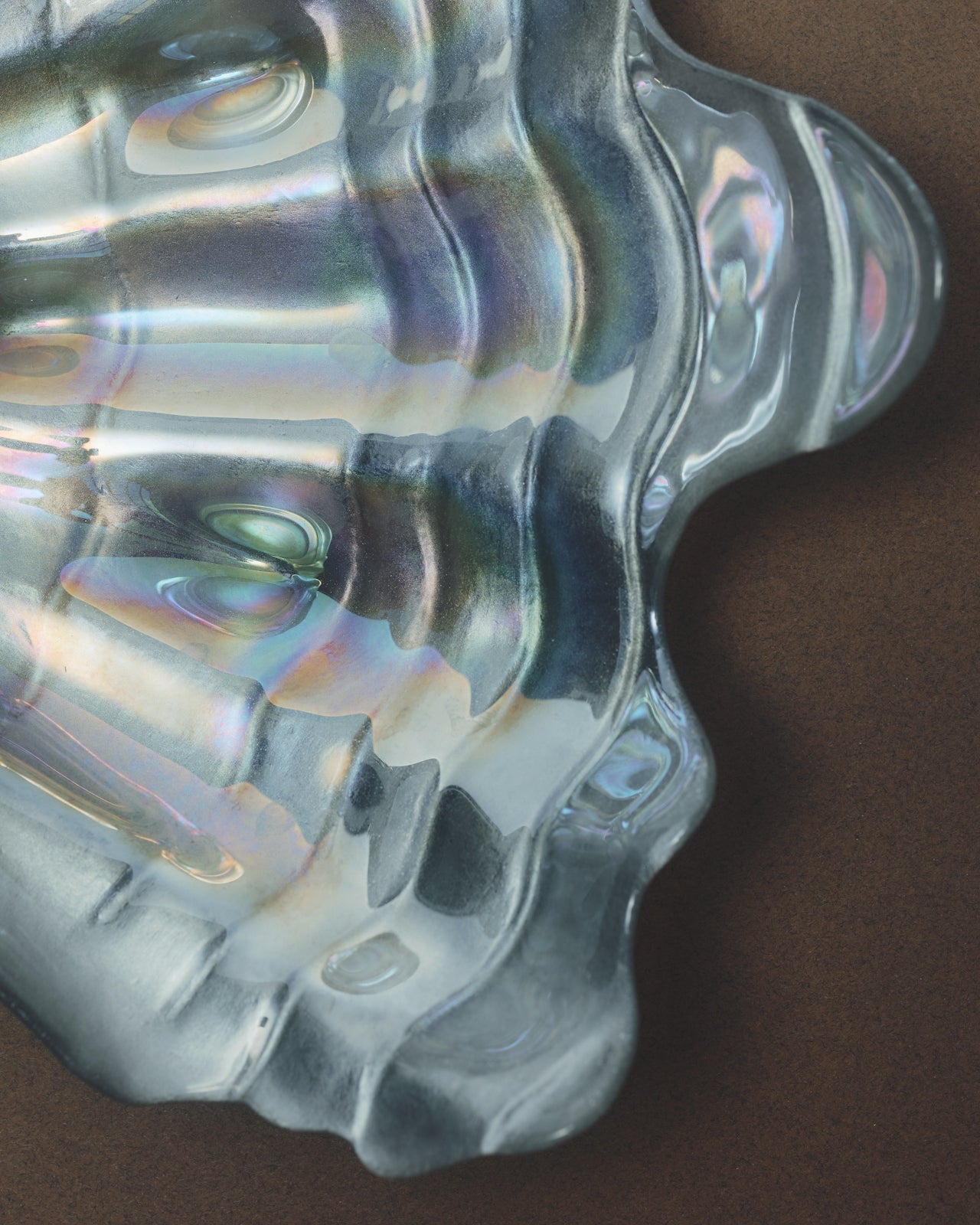
Fashion materials are entering an age of intelligence — and we don’t mean this metaphorically or stylistically. No; the next era will be defined by materials engineered through biological insight, computational modelling, and new forms of structural intelligence. The old hierarchy that framed synthetics as “advanced” is becoming increasingly outdated, and petrochemical coatings with their industrial over-processing are losing both cultural and scientific relevance — not least because of their ecological cost.
In their place emerges a generation of textiles shaped by living systems, genomic datasets, microbial behaviour and machine-learning simulations that forecast — and sometimes even self-correct — material performance. Fibres, the tiniest building blocks of all the fabrics that we wear, are now an active site of experimentation where biology, computation and design co-engineer outcomes in real time, marking a deeper reorientation in how fashion sees itself.

The future of clothing will be grown, tuned, and guided through data-driven relationships between organisms, chemistries and designers; and our clothing will be cultivated as dynamic material ecologies.
Materials are traditionally treated as fixed assets; cotton is cotton, wool is wool, leather is leather. Once a fibre was harvested, it existed in a largely predetermined state; the designer’s role was to manipulate it through pattern, cut, and form. Material intelligence breaks this paradigm entirely. Instead of treating fibres as static, designers and biotechnologists can now model fibre behaviour using machine learning, tune material properties through biological feedback, program microbial growth patterns, and engineer polymers using data-guided chemistry. This new philosophy and methodology understands materials as dynamic systems; and that with science, such systems are capable of evolving, adapting, and self-organising under specific conditions, and crucially, systems whose intelligence can be influenced.
Modern Synthesis is a design-led biotechnology company, offering one of the clearest examples of this shift. Their microbial nanocellulose is grown through a living design process in which bacteria are harnessed in order to spin ultra-fine cellulose fibres inside fermentation vessels; let’s take a second to appreciate how revolutionary this is — that bacteria are now stepping in for cotton plants, silkworms, even petrochemical polymers thanks to our scientific capacity to engineer with life instead of extracting from it.
These bacteria-spun fibres grow into sheets and structures with strength-to-weight ratios that can surpass both leather and synthetics. Because bacterial cellulose is so sensitive to things like nutrients, oxygen levels, vessel shape, and temperature, the material is always in flux — it behaves like something alive because it is alive, and by adjusting the conditions in which the microbes grow, designers can literally shape how the material forms, feels, and performs. If the conditions shift, the material shifts. The result is an iterative feedback loop between biology and design — one where the organism responds to input and, in doing so, co-authors the fibre itself.


Similarly in pioneering bio-fabrication through technology, Bolt Threads’ Mylo experiment in mycelium-based leather alternative underpinned by computational modelling. Mycelium grows in branching fractal networks shaped by humidity, airflow, nutrients, and pressure. Historically, achieving consistent sheets of mycelium leather required endless trial-and-error, but Bolt Threads were able to shorten this process by using machine-learning simulations to model how mycelium behaves under different conditions. Their systems predicted growth rates, branching patterns, and density variations, allowing researchers to fine-tune the environmental inputs more accurately.
This stabilised quality from batch to batch; with consistency of quality being one of the hardest challenges in early biomaterial development, and often the biggest barrier to scaling biomaterials. Even though Mylo’s commercial rollout paused later, the computational breakthroughs behind it now influence the wider biomaterials field. The fusion of mycology and machine learning has become one of the most promising and scalable intersections in next-generation textiles.
Algae-based materials represent another aspect of this evolution. AlgiKnit (now Keel Labs) engineers kelp-derived biopolymers that behave like soft, high-performance yarns. Their approach is defined by molecular data; by analysing the polymer chains inside different algae species, they adjust tensile strength, flexibility, stretch and recovery, and biodegradability at a chemical level. This tuning is guided by predictive modelling that simulates how a polymer will behave once extruded, spun, and knit. The result is a fibre engineered for both performance and circularity. In a world facing the imminent ecological cost of petrochemical synthetics, algae polymers offer a post-plastic material in which the substance itself is aligned with natural lifecycles and can return to ecosystems without harm.


Amidst all the material-specific innovation, it’s worth widening the lens; one of the most chemically intensive and environmentally damaging stages of textile production is also now being reimagined through biological intelligence. Colorifix is a pioneer in microbial colour engineering that uses microbes to produce pigments through DNA instructions, replacing toxic chemical dye baths with biological pigment creation. Beyond this, Colorfix also model colour behaviour using digital tools; how pigment uptake varies across fibres, how temperature affects fixation, how UV exposure influences fading, and how wash cycles erode vibrancy. By merging microbial dye production with computational pigment mapping, Colorifix offers a new paradigm for colour science.
With better predictions of how textiles behave in everyday life, we can create garments that last longer and age better, and if materials are now shaped by biological intelligence, then the way we care for them has to evolve too. If fibres are grown and guided by microbes, our cleaning systems should work with microbes; and if materials rely on biological and computational data, harsh detergents or rough washing shouldn’t undo that. Simply put, as material intelligence grows, care intelligence has to grow alongside it — protecting what the fabric was designed to do.
At The Lab, we are biological performance partners for the next generation of materials. Our work is grounded in microbiome-positive formulations, fibre-safe enzymes, and bacterial systems that align with the very vision used to create many of these materials. As textiles become more adaptive, more sensitive, and more biologically complex, the care ecosystem must evolve with them. Cleaning can no longer be an afterthought or a generic step in a garment’s life cycle; it becomes an extension of the material itself; supporting longevity, structural stability, and lifecycle continuity.
Fashion’s next chapter will be defined by a new understanding of materials as relational beings – grown, guided, modelled, and cared for through systems that mirror ecological intelligence. Material intelligence is the infrastructural foundation of this future, and as it unfolds, our task is to build the care science, cultural literacy, and biological tools that can nurture these materials through their full lifespan. In doing so, we extend the life of the garment and the life of the systems that created it.
